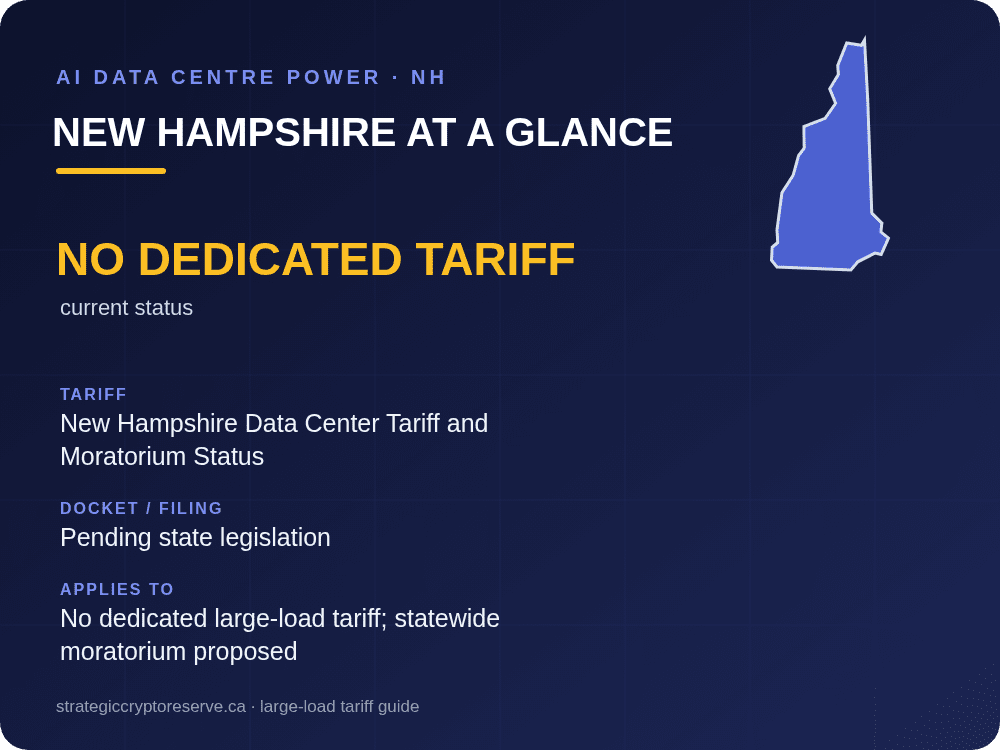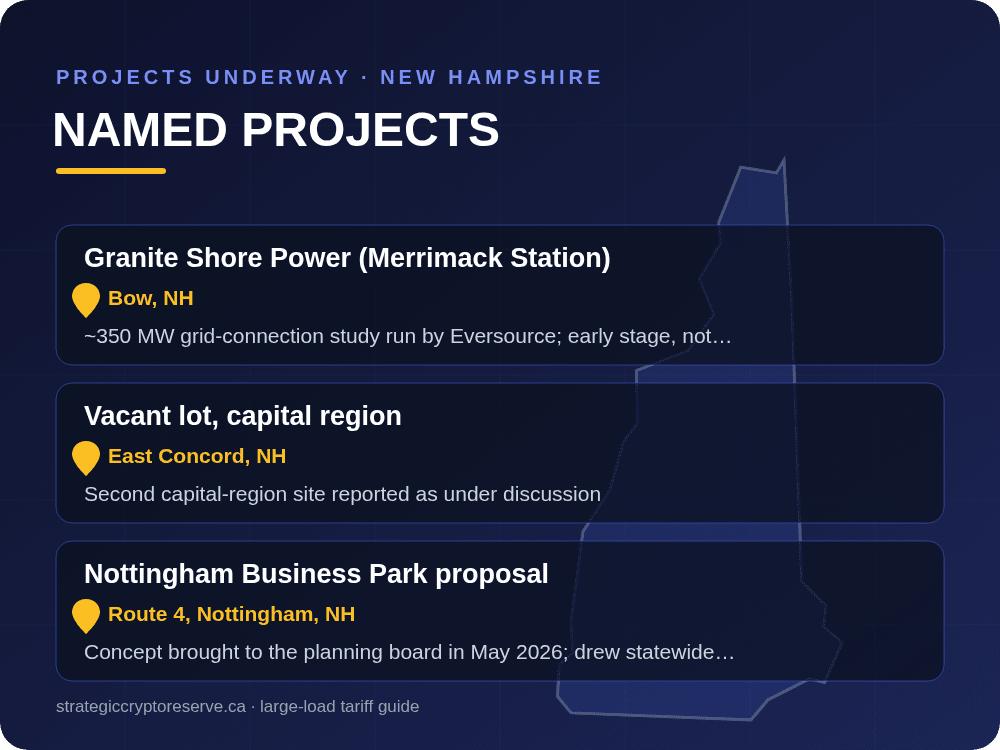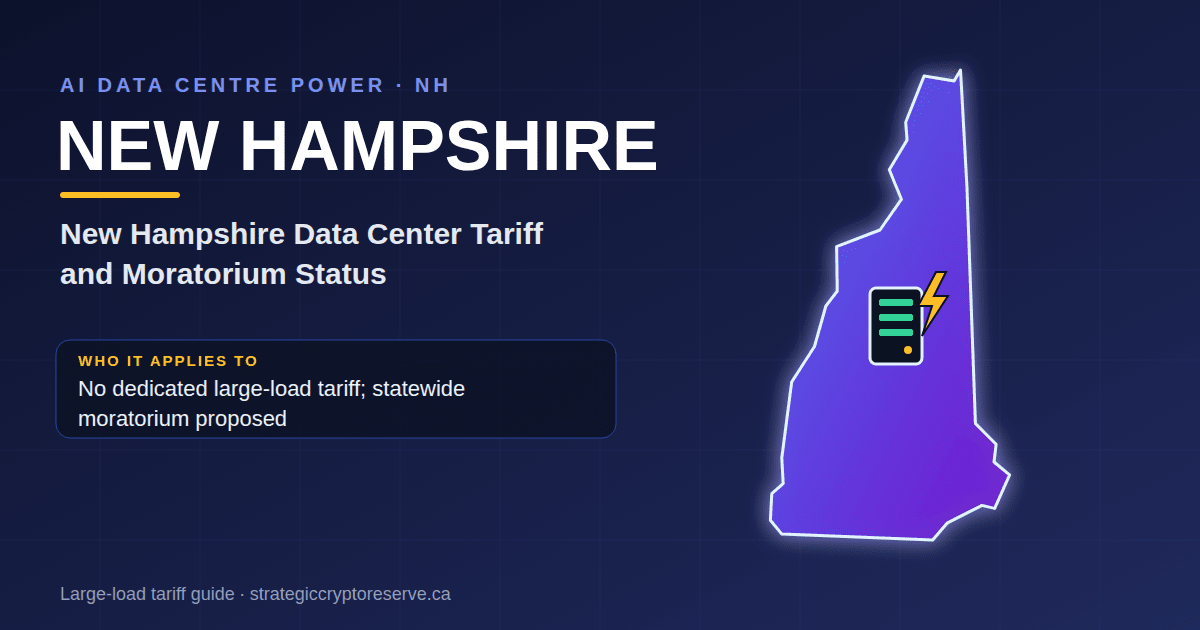
New Hampshire has not adopted a dedicated large-load tariff for data centers. Instead, the state is moving toward restricting new data center construction: Gov. Kelly Ayotte has said she will put a multi-year moratorium into the next state budget, and Senate Republicans said on September 18, 2026 that they will pursue one as well. The concern is the effect of large new loads on electricity costs for existing ratepayers, not a cost-recovery tariff mechanism.
Also active in New Hampshire: New Hampshire ranks among the more expensive US states for electricity generally, which — combined with the moratorium debate — makes it a lower-priority near-term siting candidate for hyperscale AI loads compared to states actively courting large-load investment with defined tariff terms.
Figures compiled from the Edison Electric Institute's "Large Load Projects and Tariffs" (September 2026) member-company summary and public regulatory filings. Confirm current tariff terms directly with Eversource / Unitil and the relevant state public utility commission before relying on any figure for a capital decision.
Weighing New Hampshire against another state or a Canadian province with a different rate and interconnection picture entirely? Run both sides of the comparison through our licensed AI data center cost configurator — it applies each jurisdiction's actual power rate, tax treatment and large-load tariff rules to the same seven build configurations.