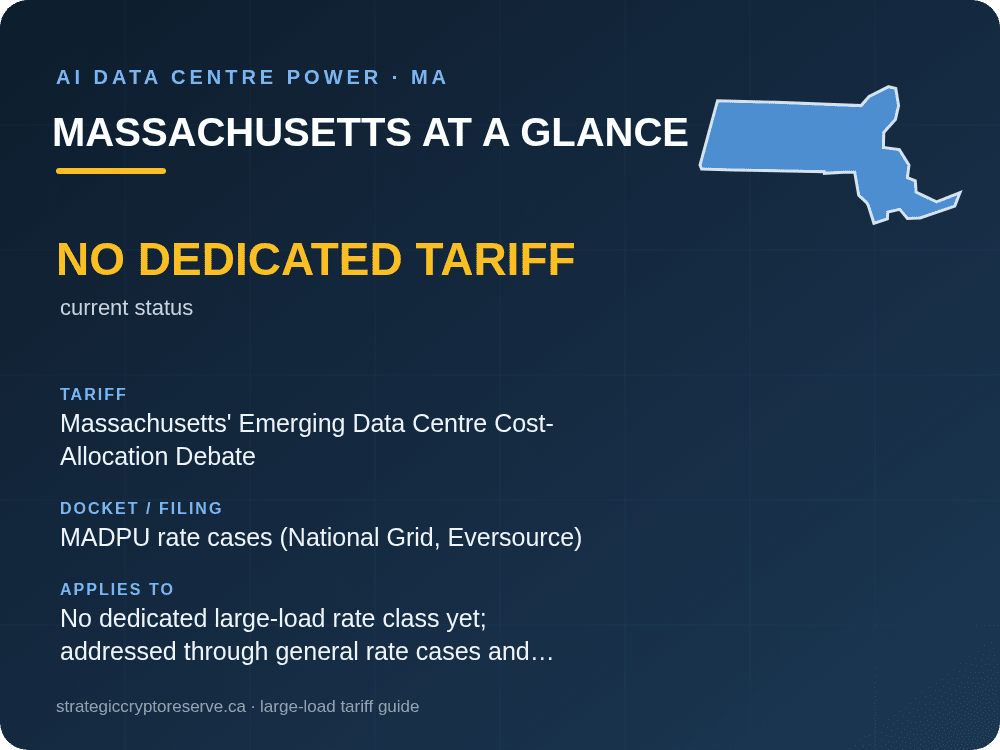
Large-load service in Massachusetts is currently negotiated through general utility rate cases rather than a dedicated large-load tariff. Eversource has publicly pressed for a higher return on equity on new high-voltage transmission investment, citing data center-driven demand as a justification for building more transmission infrastructure — a dispute playing out at FERC rather than through a Massachusetts-specific data center rate class.
Also active in Massachusetts: A pending Massachusetts bill would also shift the legal costs utilities incur while arguing for rate increases away from ratepayers, a response in part to the scale of infrastructure spending data center growth is driving across New England's shared transmission system.
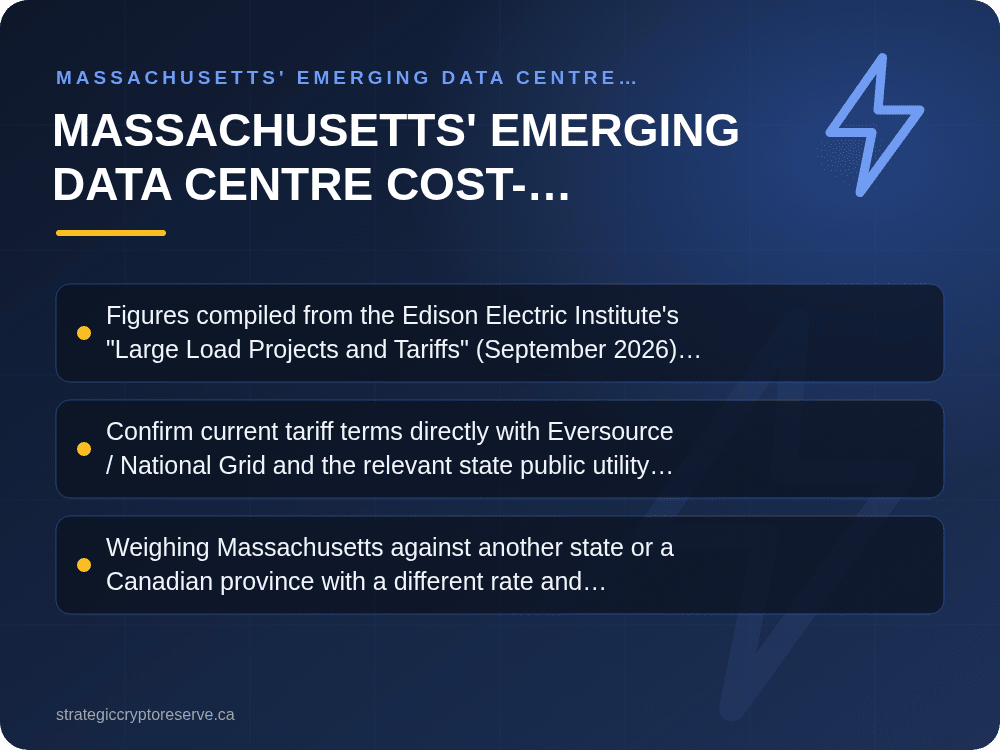
Figures compiled from the Edison Electric Institute's "Large Load Projects and Tariffs" (September 2026) member-company summary and public regulatory filings. Confirm current tariff terms directly with Eversource / National Grid and the relevant state public utility commission before relying on any figure for a capital decision.
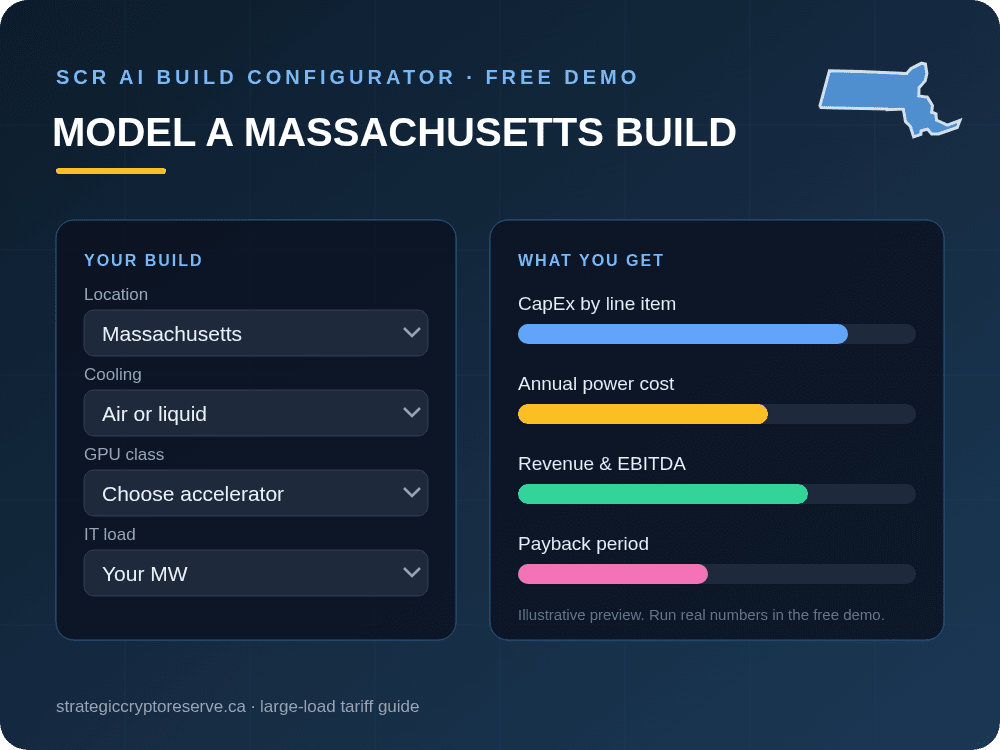
Weighing Massachusetts against another state or a Canadian province with a different rate and interconnection picture entirely? Run both sides of the comparison through our licensed AI data center cost configurator — it applies each jurisdiction's actual power rate, tax treatment and large-load tariff rules to the same seven build configurations.