
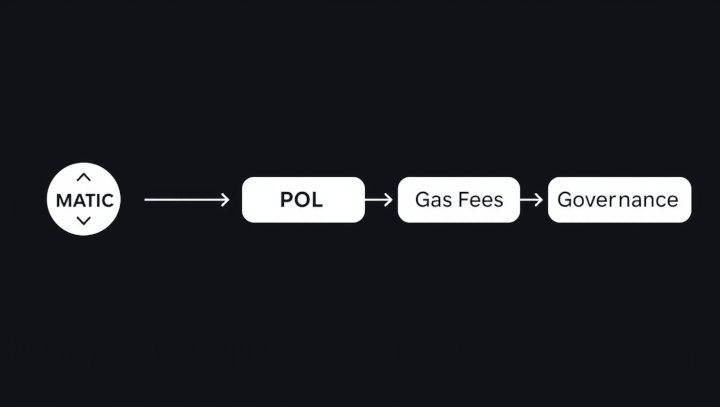
Polygon launched in 2017 as Matic Network, and for years its native token — MATIC — powered everything on the network: gas fees, staking, governance. The Polygon 2.0 roadmap, announced in 2023 and executed through 2024–2025, was an architectural overhaul designed to transform Polygon from a single Layer 2 chain into a network of interconnected ZK-powered chains unified by the AggLayer. That overhaul required a new token designed for a more complex role.
POL is designed to be a "hyperproductive" token — meaning a single token that can simultaneously secure multiple chains, participate in governance across the ecosystem, and pay gas fees on any Polygon chain. MATIC was a single-chain staking and gas token. POL is a multi-chain coordination token. The migration happened at a 1:1 ratio — every MATIC became one POL — but the underlying function expanded significantly.
Gas Fees
POL is used to pay gas fees on Polygon PoS and Polygon zkEVM. Average transaction cost remains under $0.01, making Polygon the cheapest EVM-compatible chain for NFT minting.
~$0.0047 avgStaking
POL is staked by validators to secure the Polygon PoS network. Unlike MATIC, POL is designed to extend staking to multiple Polygon chains simultaneously through the AggLayer.
Multi-chain stakingGovernance
POL holders participate in on-chain governance decisions for the Polygon ecosystem, including protocol upgrades, fee structures, and AggLayer parameters.
On-chain votingMigration Status
The MATIC-to-POL migration completed in late 2025. Major exchanges handled the swap automatically for custodial holders. Self-custody wallet holders needed to migrate manually via the official bridge.
CompleteWhat POL Means for NFT Creators and Collectors
For day-to-day NFT activity on Polygon, the practical experience of the MATIC-to-POL migration is minimal. You still pay gas in the network's native token. You still hold NFTs in the same wallets. OpenSea and other Polygon-compatible marketplaces updated their interfaces to reflect POL. The biggest visible change is the token name in your wallet and on exchange listings.
What matters more in the longer term is what POL enables architecturally. The AggLayer — Polygon's chain aggregation layer — allows NFTs and tokens minted on one Polygon chain to move across other Polygon chains without traditional bridging friction. For the NFT space, this means a collection minted on Polygon PoS could become liquid on a Polygon zkEVM gaming chain without a complex cross-chain bridge transaction. That's the promise of Polygon 2.0 for NFT creators specifically.
For Strategic Crypto Reserve's Polygon-based NFT collections, POL is the token used for gas when minting or transferring SCR NFTs. Nothing about the SCR ecosystem changed functionally with the migration — but the infrastructure under it became significantly more capable. See our Polygon 2.0 and AggLayer explainer for the technical details, or our POL staking guide if you want to put idle tokens to work.
Still have MATIC? If you hold MATIC on a major exchange, it was almost certainly migrated automatically to POL. If you hold MATIC in a self-custody wallet like MetaMask, check the official Polygon migration portal at polygon.technology to confirm whether manual migration is needed. The 1:1 ratio means there is no value change — only the token name and contract address differ.