

Polygon's Proof-of-Stake (PoS) consensus mechanism relies on validators who lock up POL tokens as collateral — a financial stake — to earn the right to validate transactions and add blocks to the chain. If a validator behaves dishonestly or goes offline frequently, they risk losing a portion of their staked POL through a process called slashing. This economic incentive is what secures the network.
As a POL holder who is not a validator yourself, you can participate through delegation: you delegate your POL to a validator you choose, and that validator uses your tokens as part of their stake. In return, you receive a proportional share of the validator's staking rewards — minus the validator's commission fee. You can undelegate at any time, though there is an unbonding period (typically around 80 checkpoints, which works out to several days) before your tokens become liquid again.
Staking Rewards
Polygon staking rewards come from two sources: block rewards issued to validators and a portion of transaction fees. Annualized yield fluctuates based on the total amount of POL staked network-wide. Check staking.polygon.technology for current APY figures — rates change as more or fewer tokens enter staking.
Variable APYValidator Commission
Each validator sets their own commission rate — typically between 0% and 10%. A validator charging 5% commission means they keep 5% of your rewards and pass on the remaining 95%. Lower commission is not always better — validator uptime and reliability matter more.
0–10% typicalUnbonding Period
When you undelegate POL, it enters an unbonding period of approximately 80 Polygon checkpoints before returning to your wallet. This typically takes several days. Your tokens are not at risk during unbonding, but they are not liquid.
~80 checkpointsNon-Custodial
You never send your POL to a third party. Delegation goes through Polygon's official smart contracts at staking.polygon.technology. You retain custody at all times and can undelegate whenever you choose.
Self-custody always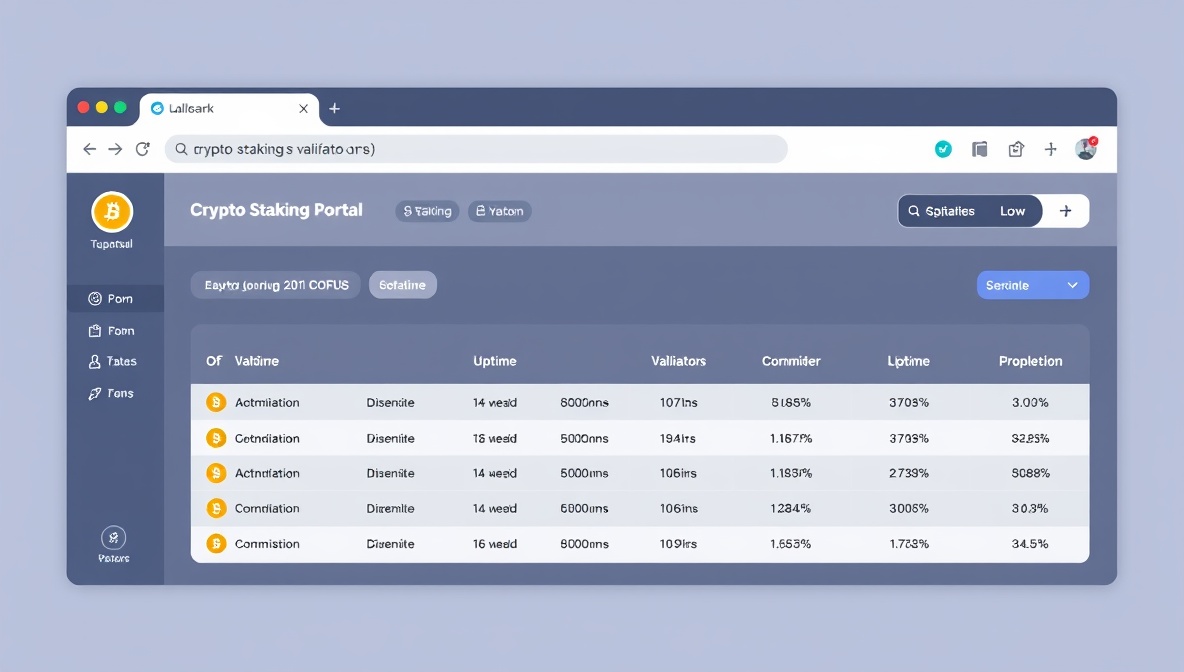
Step-by-Step: Staking POL on the Polygon Portal
- Ensure you have POL in a MetaMask wallet on Ethereum mainnet. Polygon staking uses the Ethereum mainnet version of POL (not the Polygon PoS version), because the staking contracts are on Ethereum for security. If your POL is on Polygon PoS, you'll need to bridge it to Ethereum first using the Polygon bridge at wallet.polygon.technology.
- Go to staking.polygon.technology. This is Polygon's official staking portal. Connect your MetaMask wallet. Make sure MetaMask is set to Ethereum Mainnet for this step.
- Browse the validator list. The portal shows all active validators with their commission rates, total stake, uptime percentage, and checkpoint history. Sort by uptime to find reliable validators. A high uptime (99%+) with a reasonable commission (2–7%) is a good starting point.
- Select a validator and click Delegate. Enter the amount of POL you want to delegate. The portal will show an estimated APY based on current network conditions. You'll need a small amount of ETH for the Ethereum gas fee on the delegation transaction.
- Confirm the transaction in MetaMask. Ethereum gas fees for the delegation transaction can range from a few dollars to higher amounts depending on network congestion. This is a one-time cost per delegation — you don't pay gas on every reward distribution.
- Monitor your rewards. Rewards accumulate over time and can be claimed through the staking portal. You can also restake rewards to compound your position.
Note on ETH gas for staking: Because Polygon's staking contracts run on Ethereum mainnet, you'll need ETH for gas on the delegation and undelegation transactions. This is separate from POL. For large amounts of POL, the ETH gas cost is a minor fraction of the staking position. For very small amounts, the gas cost may reduce your effective yield. Plan accordingly. See the POL token guide for background on the MATIC-to-POL migration and Polygon 2.0 for context on where staking fits in the upgraded architecture.