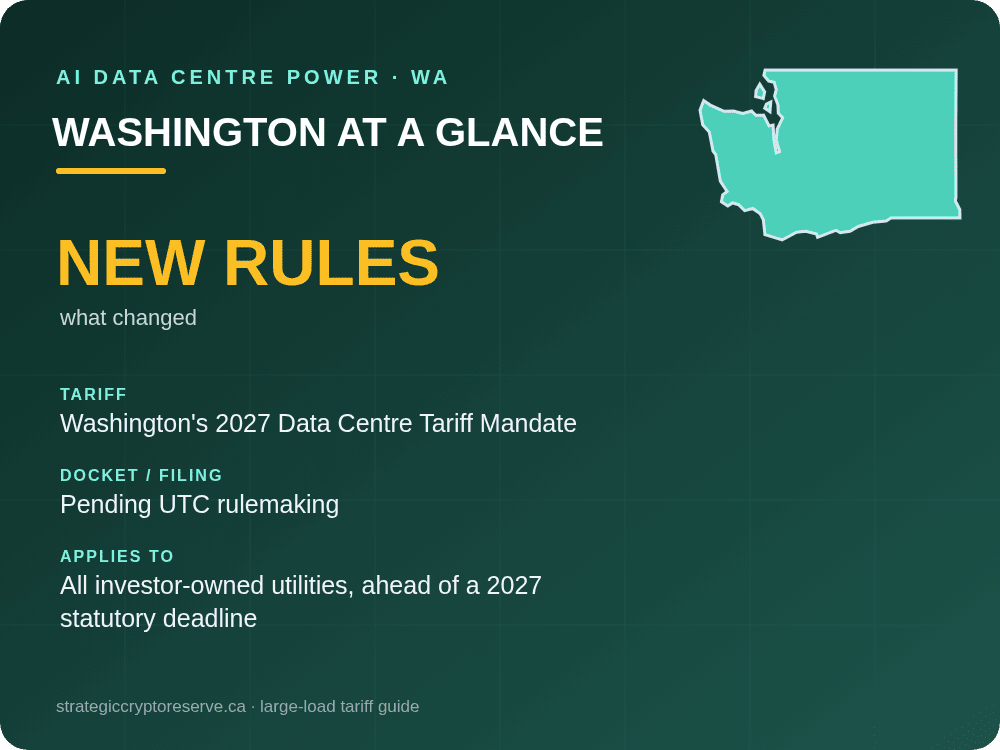
All investor-owned utilities, ahead of a 2027 statutory deadline must establish a dedicated data center tariff or policy by 2027 under Washington state legislation, ensuring large loads cover the grid costs they cause rather than shifting them to other ratepayers. The Utilities and Transportation Commission is currently writing the guidelines utilities must follow when filing their data center rates and contracts for approval.
Also active in Washington: Puget Sound Energy, the state's largest investor-owned utility, has filed a three-year general rate case with new rates targeted for early 2027 — timed to align with the incoming data center tariff mandate, though PSE has flagged that the current legislation does not fully address the competitive dynamics utilities face in securing renewable energy for large loads under the state's clean energy mandates.
Policy Update, 1 October 2026
Washington's rural and urban data centre sales tax exemptions continue for new equipment at new facilities, but ESSB 6231 ended the exemption for replacement servers and refurbished sites from 1 July 2026.
Figures compiled from the Edison Electric Institute's "Large Load Projects and Tariffs" (September 2026) member-company summary and public regulatory filings. Confirm current tariff terms directly with Puget Sound Energy and the relevant state public utility commission before relying on any figure for a capital decision.
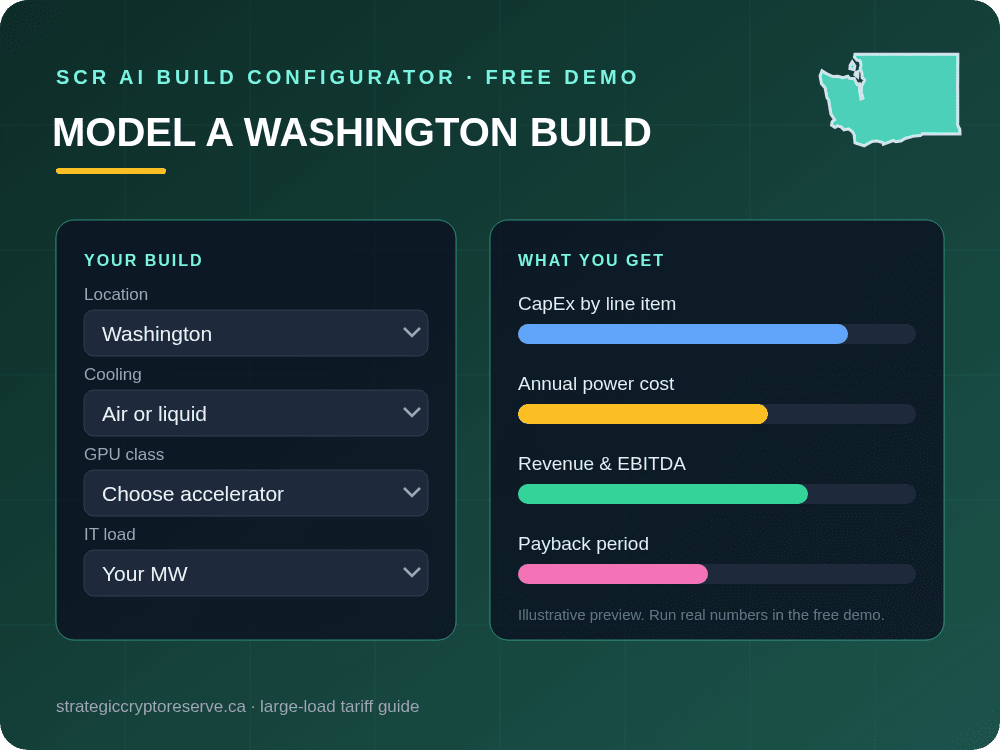
Weighing Washington against another state or a Canadian province with a different rate and interconnection picture entirely? Run both sides of the comparison through our licensed AI data center cost configurator — it applies each jurisdiction's actual power rate, tax treatment and large-load tariff rules to the same seven build configurations.
Washington’s 2027 tariff mandate is still ahead of most states’ timelines; our crypto data center in neighbouring British Columbia is already operating under its own established industrial rate today.