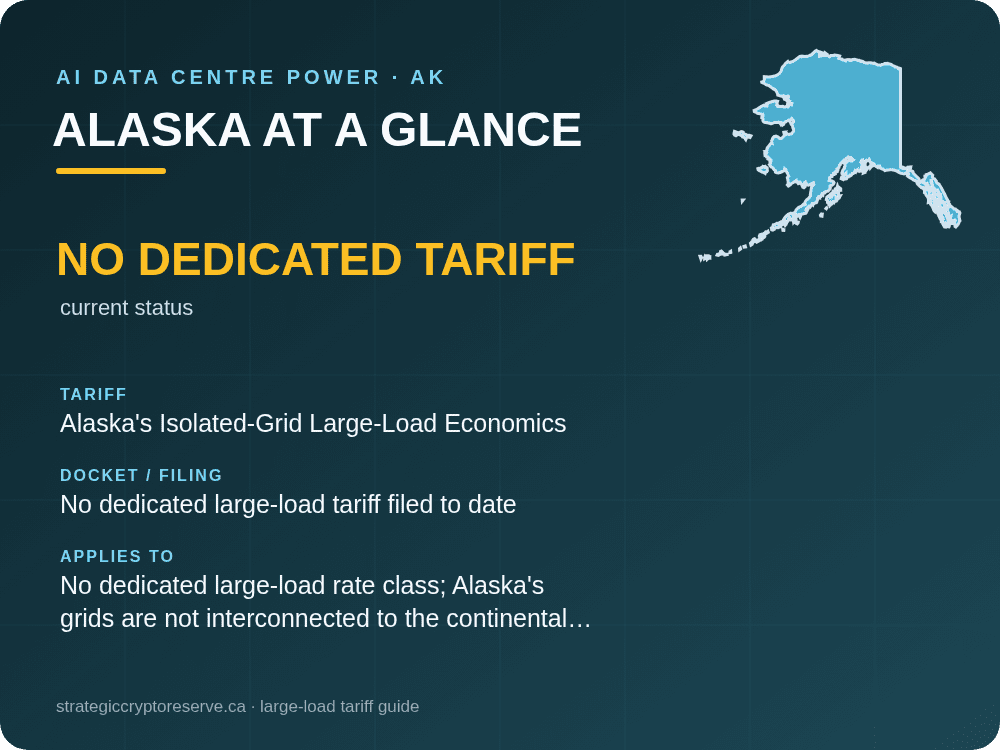
Alaska has not produced a dedicated large-load data center tariff, and the state's fundamental grid structure — several isolated regional systems with no interconnection to the LOWER 48 grid or to each other in most cases — means large-load siting economics are driven by local generation capacity and fuel cost (heavily natural gas and diesel-dependent in many regions) rather than a wholesale power market or RTO interconnection queue.
Also active in Alaska: Alaska records among the lowest data center electricity consumption of any US state, reflecting how isolated grid capacity, not tariff policy, is the binding constraint on large-load development there today.
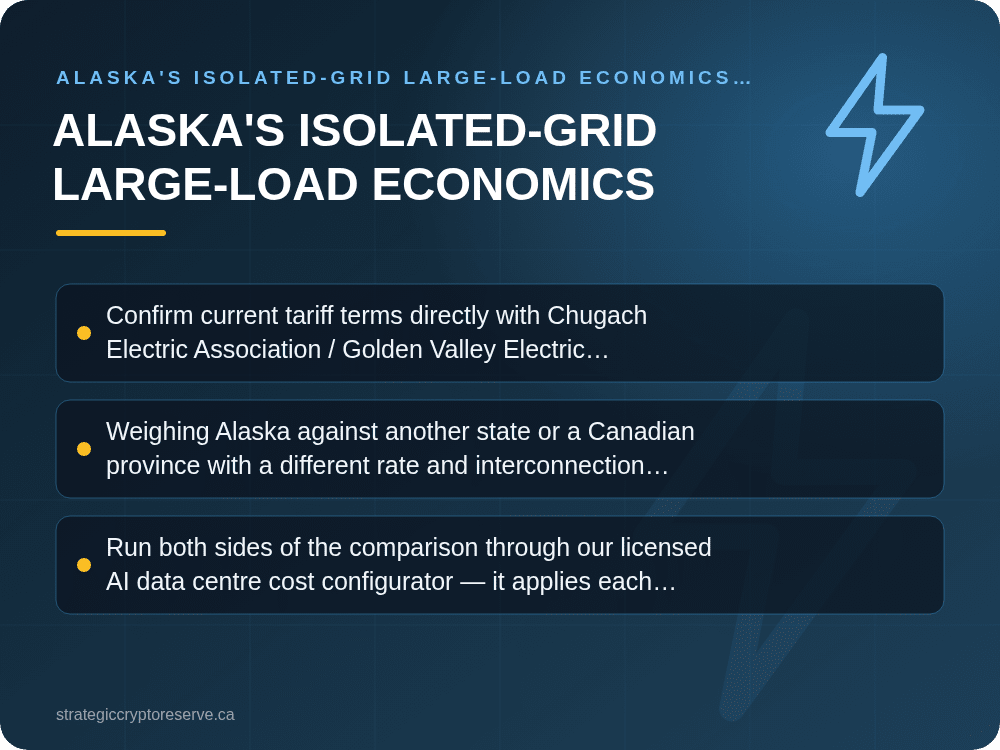
Figures compiled from the Edison Electric Institute's "Large Load Projects and Tariffs" (September 2026) member-company summary and public regulatory filings. Confirm current tariff terms directly with Chugach Electric Association / Golden Valley Electric Association and the relevant state public utility commission before relying on any figure for a capital decision.
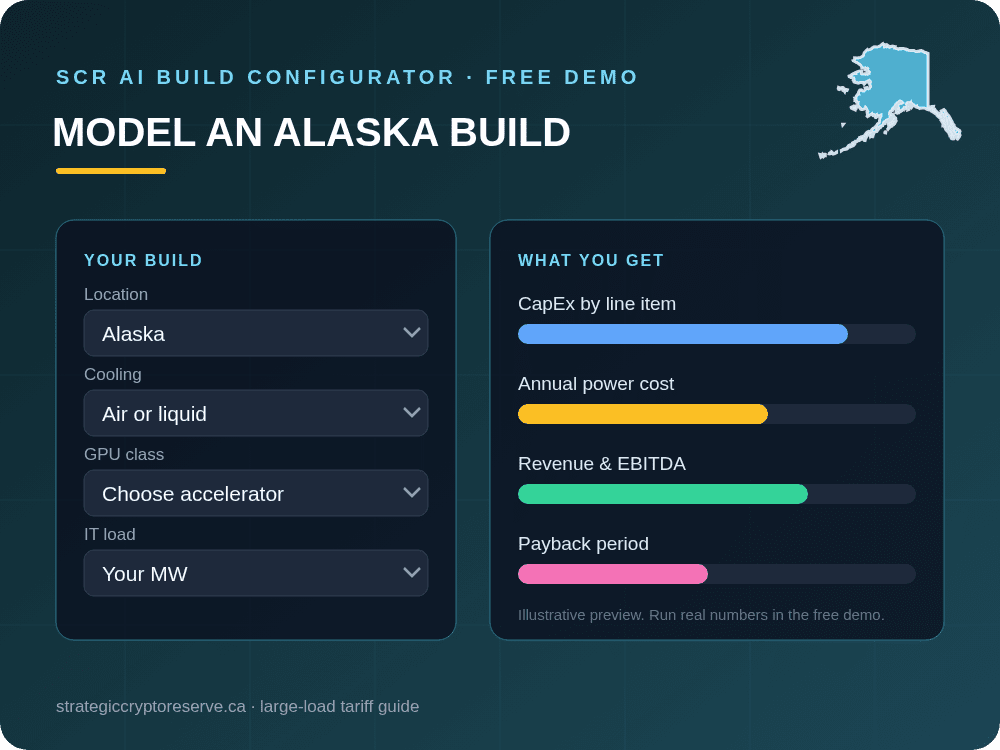
Weighing Alaska against another state or a Canadian province with a different rate and interconnection picture entirely? Run both sides of the comparison through our licensed AI data center cost configurator — it applies each jurisdiction's actual power rate, tax treatment and large-load tariff rules to the same seven build configurations.