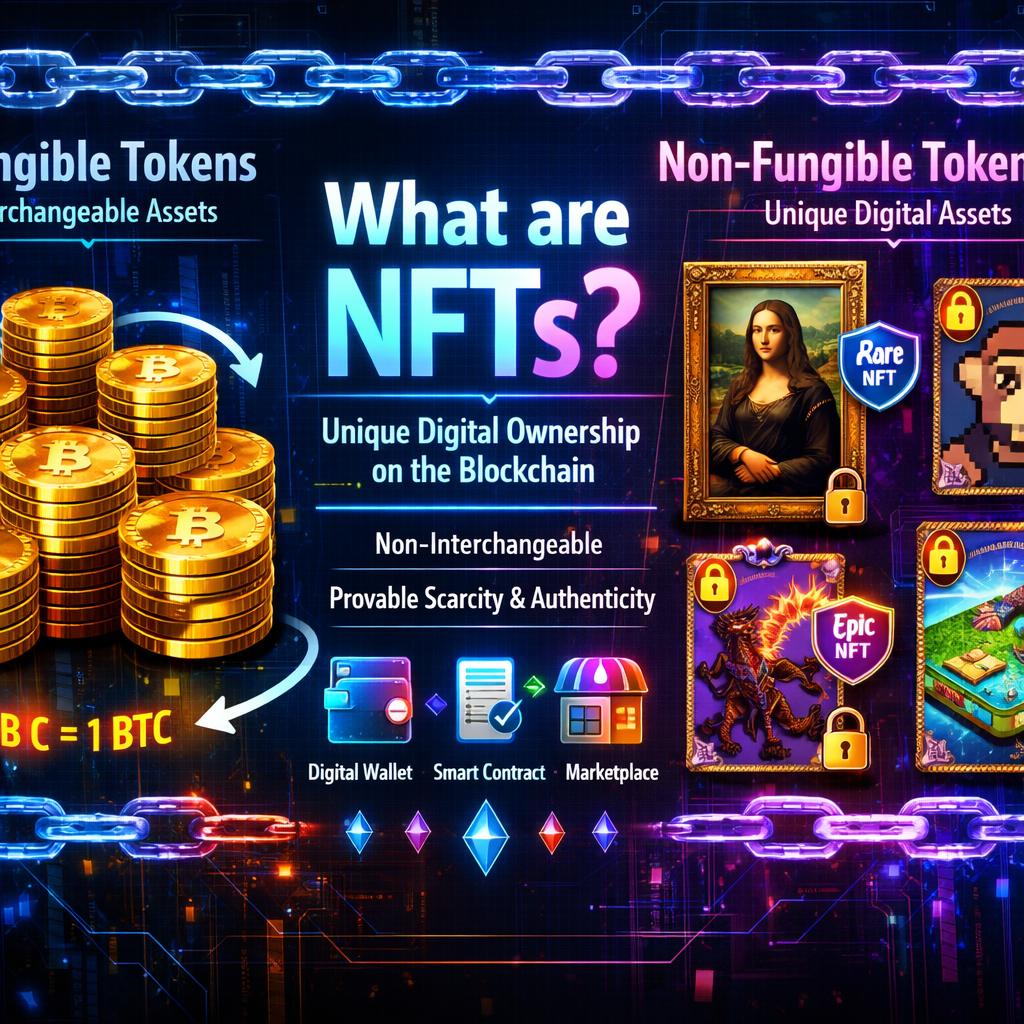
Non fungible tokens are cryptographic tokens stored on a blockchain that represent ownership of a unique asset. The term "non fungible" means that each token is one-of-a-kind and cannot be exchanged on a one-to-one basis with another token — unlike a dollar bill or a Bitcoin, where any one unit is interchangeable with any other.
Unlike cryptocurrencies such as Bitcoin or Ethereum, which are fungible and interchangeable, non fungible tokens each carry distinct identifiers and metadata. This uniqueness allows NFTs to function as digital proof of authenticity, ownership, and provenance — a verifiable record of who owns what, and when ownership changed hands.
NFTs can represent digital art, collectibles, music, videos, in-game items, memberships, and even tokenized real-world assets. Ownership is recorded on the blockchain, making it transparent, verifiable, and resistant to tampering by any single party.
When someone owns an NFT, they own the blockchain-backed record of that asset. This ownership can be transferred, sold, or held long-term, depending on the collector's strategy. For a broader primer on the underlying technology, see what a blockchain actually is.